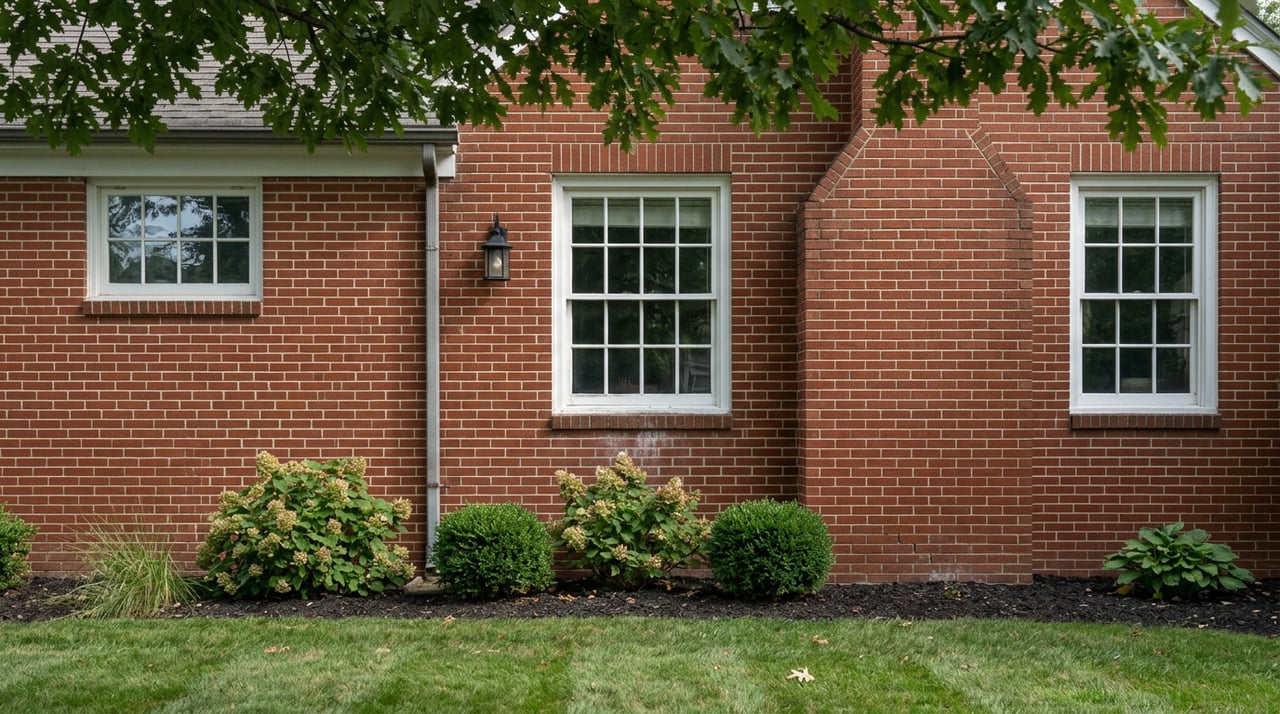
Sellers who've lived in University City or the city of St. Louis carry a specific expectation into their next move: before anyone can close, the city itself has to sign off on the house. In St. Louis city, that expectation is written into ordinance. Every property in the city sits inside a Housing Conservation District, and a Certificate of Inspection must be obtained before a sold home can be occupied again. In University City, the rule is less formal but just as absolute: anyone planning to sell should schedule an inspection before the home even goes on the market, at $80 per unit, with inspectors checking electrical, plumbing, heating, and general condition.
Ladue runs no such gate. Pull the city's own building department fee schedule and you'll find a Residential Temporary Occupancy Inspection at $45 and a Residential Temporary Occupancy Permit at $100, but these attach to new construction and permit closeout, not to every home changing hands. There is no blanket ordinance requiring a city inspector to walk through a Ladue estate before a buyer can move in. For a seller who assumes the absence of that checkpoint means a cleaner path to closing, the assumption is only half right. The risk doesn't disappear. It moves to three places most sellers never think to check until someone else finds them first.
The Checkpoint That Isn't There
The contrast is worth sitting with for a moment, because it explains why Ladue transactions feel different from a University City or city of St. Louis sale even when the price points overlap.
| Municipality | Inspection required to sell | What gets checked | Typical fee |
|---|---|---|---|
| City of St. Louis | Yes, citywide Housing Conservation District rule | Interior code violations, minimum exterior standards | $120 application ($200 if occupied without a current certificate) |
| University City | Yes, arranged before listing | Electrical, plumbing, heating systems, general condition | $80 per unit |
| Ladue | No blanket resale requirement | Ties to permit closeout and new construction, not sale | $45 inspection / $100 permit |
Ladue's building department still does plenty of inspecting. It reviews plans, issues permits for building, HVAC, and plumbing work, and schedules inspections with 48 hours notice. Electrical permits route through St. Louis County rather than the city itself. What's missing is the single trigger that forces disclosure at the moment of sale. In Ladue, that trigger has to come from somewhere else.
Where the Friction Actually Lands
Three things fill the space where a mandatory occupancy inspection would otherwise sit. None of them show up on a standard seller disclosure form, and all three surface at a point in the transaction that's harder to walk back from than a pre-listing inspection would be.
The permit that never got closed out
Ladue requires a building permit for far more than new construction. Patios, driveways, walkways, storage sheds, fences, retaining walls, play sets, interior and exterior remodels, additions, demolitions, and the removal of five or more trees all need one, and the average permit carries between two and six separate inspections at $45 each. Over the life of a home that's changed hands two or three times, that adds up to a lot of paperwork, and it only takes one missed final inspection to leave a permit technically open.
Contractors working across St. Louis County describe the consequence plainly: unpermitted or unclosed work can bring a project to a halt, and in some cases force the removal of work that was never approved, creating problems both at resale and with insurance. A title search won't catch this. A call to Ladue's Building Department, checking permit history against the address before the home ever goes on the market, will.
What the inspector finds behind the walls
Because there's no city-mandated walk-through, the first official look at a home's systems is almost always the buyer's private inspector. In Ladue, that inspector is working inside a housing stock where a meaningful share of the inventory predates 1970. Contractors who renovate in the city regularly note the pattern: minimal insulation, single-pane windows, outdated HVAC, and original electrical panels that can't carry modern loads. None of that is a defect specific to any one address. It's simply what four to seven decades of untouched systems look like in a home built before energy codes existed in their current form.
The sellers who control this narrative are the ones who get ahead of it, commissioning a panel assessment or a pre-listing inspection before a buyer's report turns it into a negotiating point under time pressure.
The Architectural Review Board clock
If a buyer's inspection flags something that requires exterior work to correct, rotted trim, an egress window, chimney repair, that repair doesn't just need a permit. New construction and any exterior modification in Ladue first require review by the Architectural Review Board, and that review typically takes two to three weeks for approval, with new residential permits sometimes taking longer because of multiple staff reviews. A seller who promises to fix something exterior "before closing" may be promising a timeline the ARB alone won't allow.
What This Means for Pricing an Older Estate
This is where the three friction points converge into something closer to strategy than caution.
Ladue's median home price ran near $1.4 million in 2024, but homes primed for teardown construction have traded closer to $550,000, a gap wide enough to tell you something about how the market actually prices this inventory. Builders working in the city note that Ladue's stock leans heavily toward mid-century and older homes on large lots, and that buyers acquiring land for a custom build are doing so with a teardown already in mind. Build-ready lots have traded between $1 million and $3 million or more before construction starts, with finished custom homes running $600 to $1,200 or more per square foot.
If a home carries real permit gaps or genuine system age, chasing a fully repaired, move-in-ready condition may not return the investment when the most likely buyer plans to demolish anyway. In that scenario, the fight isn't over repair credits. It's over land value, and pricing the home accordingly from day one saves everyone the back-and-forth over a kitchen that's coming out regardless.
Ladue's scrutiny doesn't stop at individual permits either. This summer, the City Council unanimously rejected a rezoning application from TriStar Properties for what would have been the city's first-ever apartment development, a proposal for 235 luxury apartments, 31 villa homes, and 11 custom single-family homes at the Rock Hill Quarries site near Old Warson and South McKnight roads, citing flooding and traffic concerns tied to Deer Creek. The same attentiveness that shaped that outcome shapes how closely a single-family renovation gets reviewed. This is a city where changes, large or small, get looked at carefully.
A Short FAQ
Does Ladue require a city inspection before I can sell my home? No blanket ordinance requires one. The city's temporary occupancy process ties to new construction and permit closeout, not to every resale.
I have a fence or patio permit from years ago and I'm not sure it was ever closed out. What do I do? Call the Ladue Building Department at 314-997-6308 and ask for the permit history on your address before you list. It's a five-minute call that can prevent a closing-week surprise.
Will inspection repairs delay my closing? Only if the fix touches anything exterior, which triggers Architectural Review Board review on a two-to-three-week minimum timeline. Interior repairs generally move on standard permit review schedules.
A Ladue sale rewards the seller who treats the absence of a mandatory inspection as an invitation to look closer, not an excuse to look away. Structuring repair credits, closing out old permits, and timing anything that touches the exterior against the ARB calendar is exactly the kind of contract-level work a litigation background is built for. If you're weighing a sale in Ladue and want someone who reads the permit history before the buyer's attorney does, Will Springer Homes can help you schedule a consultation with Will.