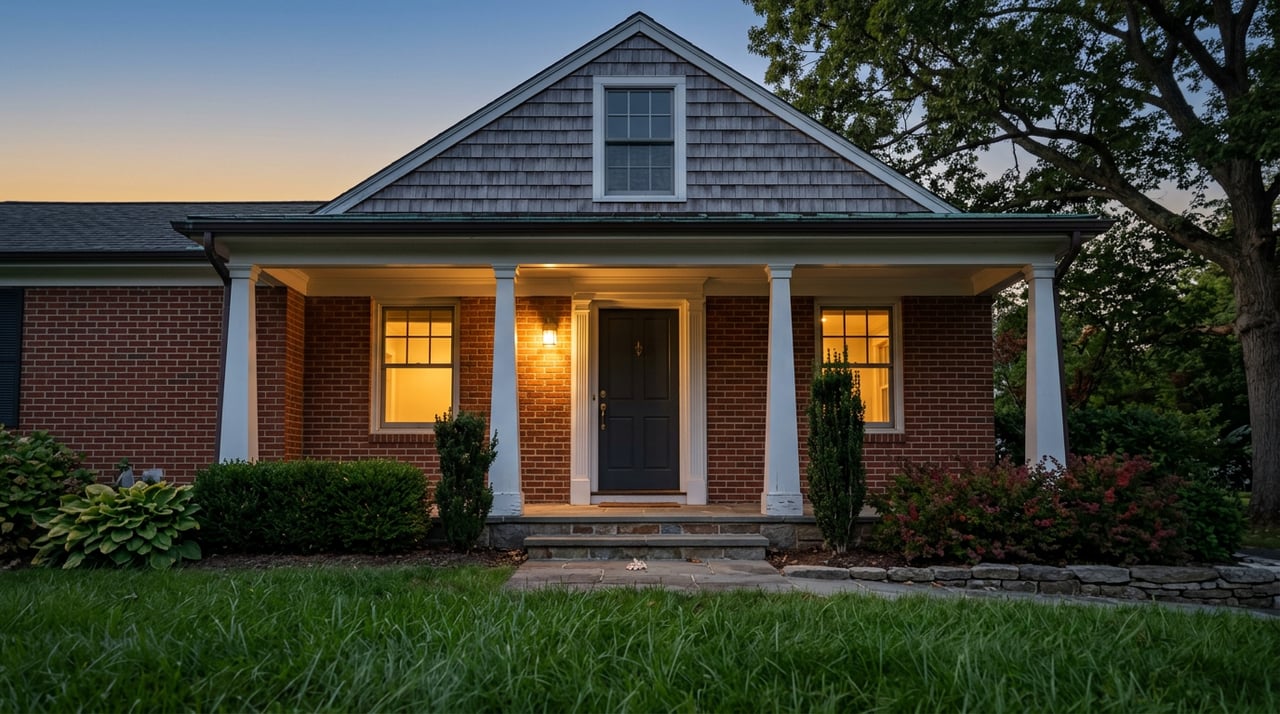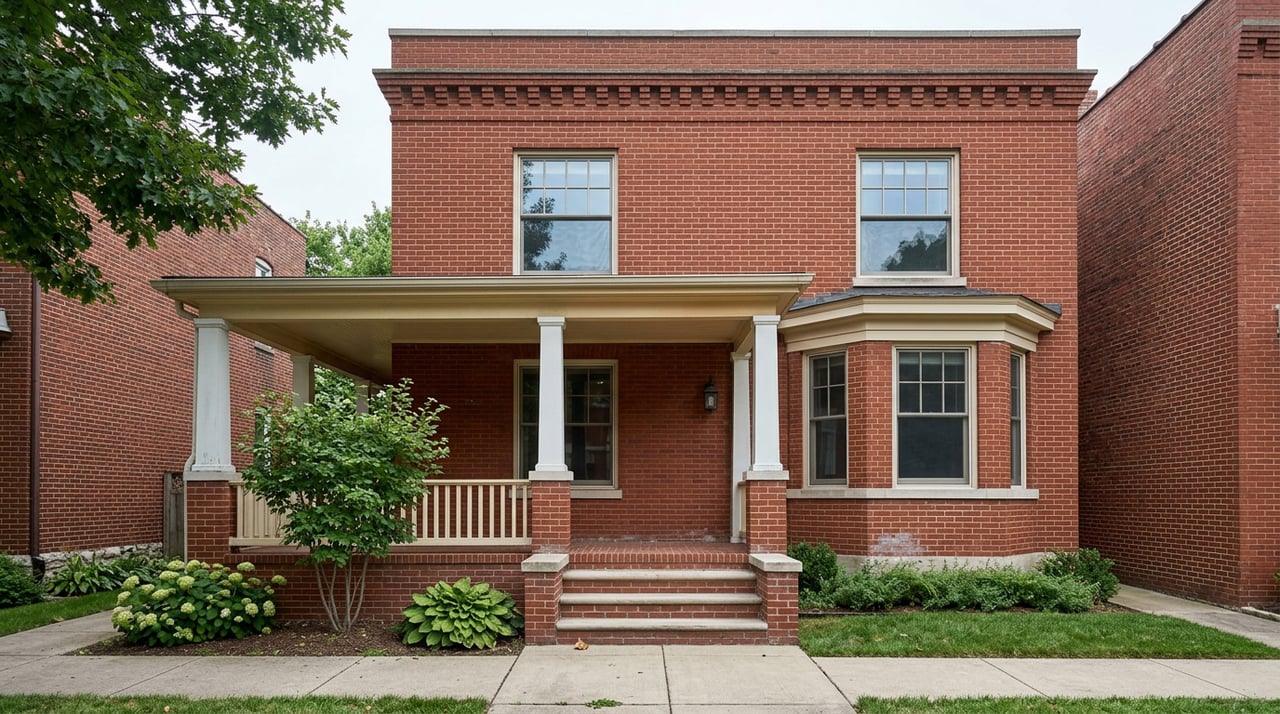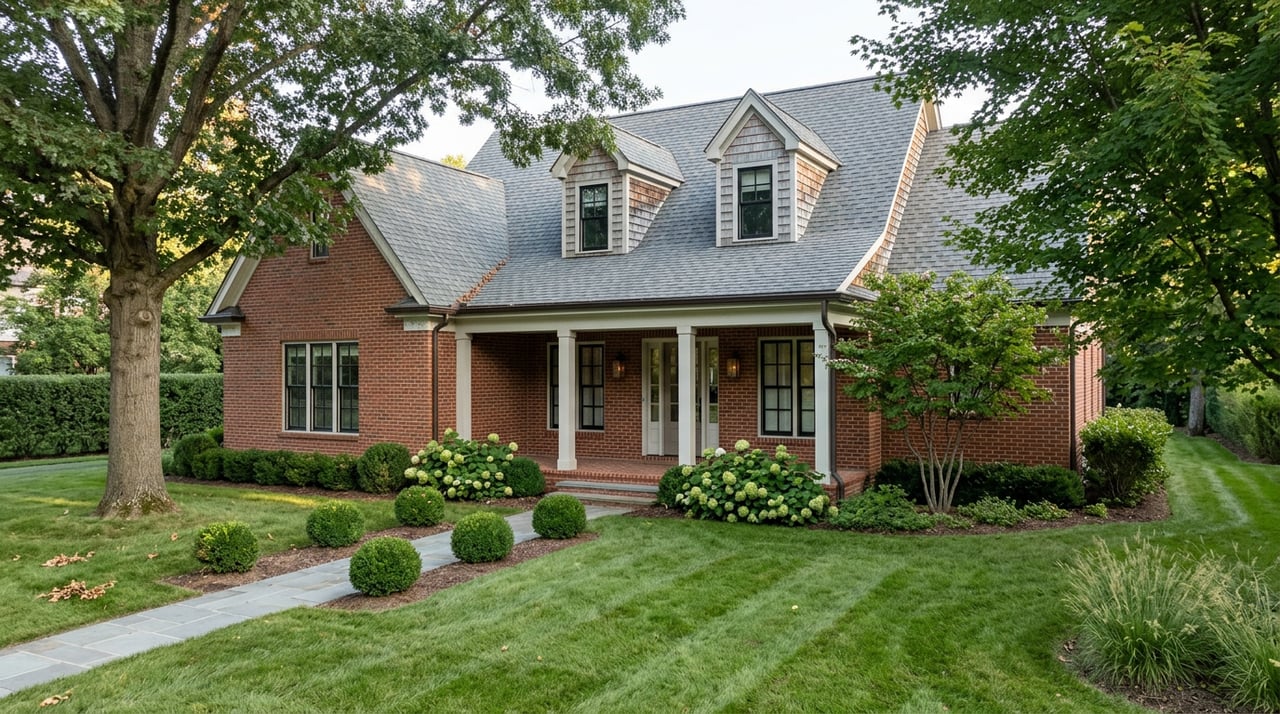
Why would a house in Town and Country take more than seven months to sell while the neighborhood's typical home closes before the open house signs come down?
That is what the numbers for Town and Country show right now. In August 2026, homes that sold carried an average of 224 days on market, up sharply from 32 days the year before, even as the pace of closings picked up to 27 for the month, roughly triple the 8 sold in August 2025. Meanwhile, looking at the trailing twelve months through June 2026, the typical closed sale in this city carried a median price of $1,450,000 and took a median of just five days to go under contract, a figure essentially unchanged from the twelve months before it. Two numbers, describing the same city, in the same window of time, pointing in opposite directions.
It gets stranger. Over the same stretch, one widely used home-value estimate showed Town and Country values up 7 percent year over year as of late July 2026. Another dataset, tracking the three months ending July 2026, showed the median sale price down nearly 12 percent from a year earlier. Both can be true. They are measuring different slices of the same market, and the reason those slices exist at all traces back to a decision the city's founders made 76 years ago.
A one-acre floor written into the founding charter
Town and Country came into being on January 8, 1950, when a small group of residents near the intersection of Ballas Road and Clayton Road formed their own village rather than wait to be swallowed by expansion plans from neighboring Frontenac and Des Peres. The city's own history of that founding period is direct about the motive: residents around that intersection had grown concerned about efforts by those two municipalities to extend their corporate limits, and incorporating was the way to keep control of what got built and where.
Control, in practice, meant lot size. The village's earliest ordinances, recorded in the city's own archived history of 1950 to 1975, required at least one acre for any home on an approved road and three acres on an unapproved one, with a minimum of 1,500 square feet of living space per house. That founding rule never got repealed. It got codified. Today, the zoning code's Suburban Estate District still sets a minimum lot area of 43,560 square feet, which is exactly one acre, along with a 150-foot minimum lot width and a rule against splitting existing parcels into smaller ones. Flag lots, the awkward slivers that let a developer squeeze an extra house behind another, are not permitted at all.
Here is the part that matters for anyone reading a listing today: a rule against subdivision is a rule against supply ever expanding from the inside. Every acre-plus lot that exists in Town and Country right now is close to the total number that will ever exist within the city's current boundaries. Nobody can carve a half-acre lot in half again. That permanent ceiling on lot count is the mechanism behind everything else in this market, including the paradox in the opening numbers.
What a given price actually buys
Because the one-acre rule applies everywhere but was enforced with more or less land depending on when and where a subdivision was platted, the city's price ladder tracks lot pattern almost as closely as it tracks square footage. Based on the trailing twelve months of closed sales through June 2026, the tiers looked roughly like this:
| Price point | What it typically buys |
|---|---|
| Around $936,000 | An older ranch or traditional two-story on a full one-acre lot, often original finishes, in corridors like Topping Estates or along Clayton Road |
| $1,450,000 (the twelve-month median) | A 4,000 to 5,000 square foot home, updated or recently renovated, on an acre or more with mature tree cover |
| Around $2,100,000 | Newer custom construction on larger parcels, including Estate District lots of 80,000 square feet or more, near Mason Heights or within reach of Bellerive Country Club |
| Above $2,835,000 | Multi-acre compound-style estates, often gated, with pool and guest-house configurations |
The typical home across that twelve-month window ran about 4,927 square feet at roughly $294 per square foot. Read that ladder against the zoning history and a pattern appears: the entry tier and the median tier both sit on lots the code protects from ever being subdivided. The land under a $936,000 house and the land under a $1,450,000 house are, in the eyes of the zoning code, the same asset. The difference is what has been built and maintained on top of it.
Why the same market produces a five-day sale and a 224-day listing
With only 34 active listings against 104 closed sales over the trailing twelve months through June 2026, buyers are choosing from a genuinely small pool. When a home is priced against what that pool has actually been paying, on the acre-lot pattern the city has protected since 1950, it moves fast. A five-day median time to contract is not a fluke. It is what happens when demand is stable and supply cannot expand, so a correctly priced home gets multiple lookers within days rather than waiting weeks for the right buyer to wander in.
The 224-day average for August 2026 is not describing that same buyer pool. An average, unlike a median, gets pulled hard by a small number of extreme outliers, and in a market this size a handful of stale listings can move it by months. Those outliers tend to fall into a few recognizable categories: homes priced for their finishes rather than their land, properties still carrying pre-renovation condition that buyers expect at a discount rather than at the neighborhood's updated median, or parcels that only make financial sense to a buyer planning a teardown and rebuild, who by definition is a narrower and more patient audience than the buyer shopping for a move-in-ready home. None of that means the market softened. It means the market has two distinct populations of sellers, one moving on the zoning-protected land value and one waiting for a specific kind of buyer, and folding them into a single average erases the difference.
That is also the simplest explanation for why one dataset can show values up 7 percent year over year while another, tracking the same three-month window, shows the median sale price down close to 12 percent. If the mix of what closed shifted toward more of those slower-moving, lower-priced outlier properties in one period and toward updated median-tier homes in another, both figures can be accurate and still tell opposite stories about direction.
A private layer sits on top of the zoning
One more thing worth knowing before touring: the city's zoning code sets the floor, but many Town and Country properties also fall inside a subdivision governed by a recorded trust indenture, a private agreement between homeowners that can add its own restrictions on setbacks, fencing, architectural style, or additions. The city does not enforce these documents. The subdivision's own trustees do, through the homeowners association, and a buyer only sees the specific indenture for their subdivision at closing, when the title company references it. Two lots that meet the same zoning minimum can still carry very different rules about what an owner is allowed to build, and that layer is worth asking about before assuming the zoning code is the only rulebook in play.
The number to ask about, not just the number to read
If a listing in Town and Country has been sitting for months, the useful question is not whether the market has cooled. It is whether that specific home is priced for its land, which the zoning code has protected since 1950 and will keep protecting, or priced for a finish level the current buyer pool has already priced past. A five-day sale and a 224-day listing can exist in the same city in the same month because they were never competing in the same market to begin with.
If you are trying to figure out which side of that line a specific property sits on, or you own a home in Town and Country and want a pricing strategy built around what has actually closed rather than what a portal average suggests, William Springer works this market street by street. Schedule a consultation with Will to get a read on your specific address before you price it, or before you make an offer on someone else's.