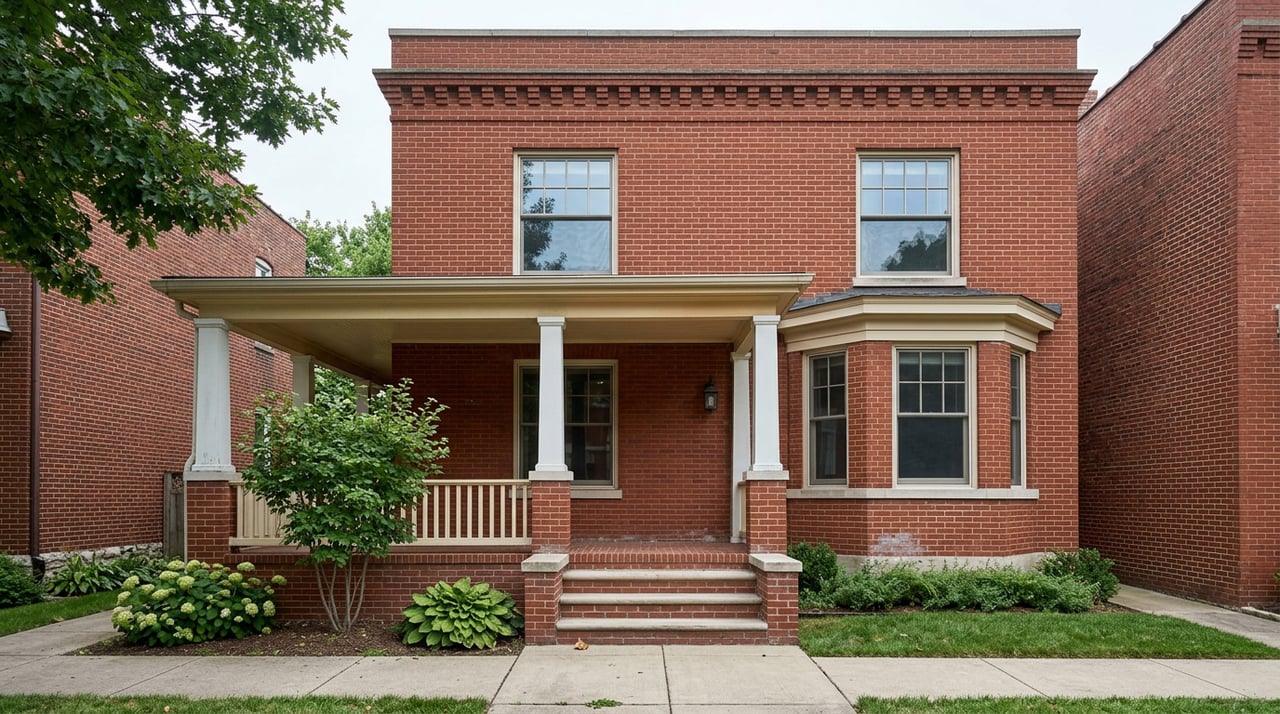
A seller lists a two-story brick in South City on a Friday. By the following Thursday, an offer lands at asking price. The seller signs, feels the relief that comes with a fast contract, and starts packing boxes. Then the closing coordinator asks a question nobody warned them about: has the Housing Conservation inspection been scheduled yet?
It hasn't, because most sellers have never heard of it until this exact moment.
Here is the thing about selling inside the City of St. Louis that a lot of first-time sellers, out-of-state relocators, and even some suburb-to-city movers miss. Every single parcel in the city sits inside a Housing Conservation District, and under City Ordinance No. 71835, a Certificate of Inspection is a legal precondition of closing, not a courtesy step. The inspection itself is rarely the problem. Most homes pass or clear violations within the standard window without drama. The real risk is sequencing. The city's own scheduling rules and a fast-moving contract calendar do not run on the same clock, and if a seller doesn't start the process the day the sign goes in the yard, the two clocks can collide right before closing.
What Ordinance 71835 Actually Requires
The city updated its Housing Conservation Program rules through Ordinance 71835, which took effect April 26, 2024, with revised application procedures effective October 7, 2024. The underlying requirement hasn't changed in decades: for residential sales, a Certificate of Inspection must be obtained before occupancy of the unit is permitted. The inspection checks minimum interior code violations and exterior standards under the International Property Maintenance Code. It sets the number of people who may legally occupy the unit. It is explicitly not a substitute for a private home inspection and carries no warranty on the condition of the home's systems, a distinction the city's own page on residential occupancy states directly.
The application fee is $120 for a vacant unit and $200 if the unit is occupied at the time a violation is discovered. Water and electric service must be operable at the time of inspection, which matters for a seller who has already had utilities shut off in anticipation of moving out.
The Timeline That Actually Trips People Up
This is where the thesis of this whole post lives. The city sets its own scheduling window for the inspection: the earliest date is three business days from the day you apply, and the latest is fifteen days from that same application date. If violations turn up, the property owner gets thirty days to make repairs before reinspection.
Now compare that to how fast city homes are currently moving. Over the three months ending in May 2026, City of St. Louis homes sold in a median of 21 days, with a median sale price near $255,000, up 6.2 percent from the same period a year earlier. Some 2026 readings have put the city's under-contract pace as fast as 17 days in a given month. Either way, a seller can go from listing to signed contract faster than the city's own inspection window guarantees a completed, passed certificate.
Stack the two timelines side by side and the collision becomes obvious.
| Event | Typical timing |
|---|---|
| Home goes under contract in the city | Median of 17 to 21 days from listing (2026) |
| Earliest the HCD inspection can be scheduled | 3 business days after application |
| Latest the HCD inspection can be scheduled | 15 days after application |
| Repair window if violations are found | 30 days |
| Reinspection and certificate issued | Additional days depending on inspector availability |
A seller who waits until an offer is signed to even apply for the inspection is already behind. If the home fails on something as minor as a missing GFCI outlet or an unscreened exhaust vent, the thirty-day cure period alone can outlast a buyer's financing contingency. The fix isn't complicated. It's timing. Apply for the Housing Conservation inspection the same week the home is listed, not the week it goes under contract.
What Inspectors Are Actually Looking At
The inspection is a basic code sweep, not a forensic review. Inspectors walk the exterior and interior, check common areas in multi-unit buildings, and confirm the unit's safe occupancy load. Common findings tend to be inexpensive and fast to fix: missing or expired smoke and carbon monoxide alarms, exposed wiring, loose handrails, and exterior maintenance items like peeling paint or damaged siding. None of these require a contractor's crew for weeks. They require someone to notice them before the inspector does.
The Twelve-Month Rule Investors and Repeat Sellers Miss
There's a wrinkle that catches multi-family owners and anyone flipping a property inside a normal holding period. A new Certificate of Inspection is required if the home is sold and no certificate has been issued in the previous twelve months. That means owning a property that already passed inspection eighteen months ago doesn't exempt a seller today. For an investor moving a small portfolio of city units in sequence, that twelve-month rule can mean budgeting a fresh inspection fee and calendar buffer for each closing, not just the first one.
Historic Districts Add a Second Layer
If the property sits inside one of the city's local historic districts, there's a separate approval process layered on top of the Housing Conservation requirement. The Cultural Resources Office reviews any exterior work in a City Historic District, and a permit is required for essentially all of it, with the sole exception of painting wood trim. That covers tuckpointing, window and door replacement, fencing, gutters, and porch repairs, all common pre-listing fixes for the kind of century-old brick housing stock that defines many south and central city neighborhoods.
The good news is that most of these permits move fast. The CRO's own FAQ states that most permits are approved within five working days, and smaller projects like fences, decks, and repointing can often be approved over the counter at the CRO Hotspot desk in City Hall. The exception is larger projects that don't clearly comply with a district's design standards. Those get scheduled for the Preservation Board, which meets only once a month, on the fourth Monday. A seller who discovers in week three of a listing that a porch repair needs board approval has just lost a month they didn't budget for.
What This Means If You're Pricing a Sale This Fall
None of this changes what a city home is worth. It changes how much runway a seller needs before listing. A home priced correctly in today's market is realistically looking at a contract inside three weeks. That leaves almost no room to discover a Housing Conservation violation after the fact, especially if the fix requires a Cultural Resources permit on top of the inspection itself.
The practical sequence looks like this: order the private pre-listing inspection first, since it will surface the same categories of issues the city checks for, plus more. Apply for the Housing Conservation inspection in the same week the home is prepped for photos, not after an offer arrives. If the property is in a historic district and any exterior work is planned, get that permit question answered before repairs start, not after a contractor has already begun. For pre-1978 homes, which cover a large share of the city's housing stock, the federal lead-based paint disclosure requirement still applies regardless of the city inspection outcome, so that paperwork should be handled in parallel, not as an afterthought once a buyer's attorney raises it.
A Short FAQ
Does this apply to condos, not just single-family homes? Yes. The Certificate of Inspection requirement applies to residential units generally, including condominiums, and covers common areas in addition to the individual unit.
If I bought my home eight months ago and it passed inspection then, do I need a new one to sell now? Likely not, since the certificate is valid for twelve months. If it has been longer than a year, or if you're unsure when the last certificate was issued, confirm directly with the Building Division before listing.
Does a National Register historic listing trigger the same review as a City Historic District? No. National Register listing alone does not create the same local design review requirement for a private owner. Only City Historic District designation or City Landmark status triggers Cultural Resources Office review for exterior work.
Can I sell as-is and skip the inspection entirely? No. The Housing Conservation inspection is a legal precondition of occupancy, and occupancy is a legal precondition of closing on a residential sale in the city. It applies regardless of whether the sale is marketed as-is.
Selling inside the city rewards sellers who treat the calendar as part of the pricing strategy, not an afterthought once a contract is signed. If you're weighing a listing timeline against a Housing Conservation inspection, a historic district permit, or both, Will Springer Homes can walk through the sequence with you before the sign goes in the yard. Schedule a consultation with Will to build a timeline that accounts for both clocks from day one.